Jump to Link Menu (For mobile devices.)
Pathfinder Roleplaying game fiction by H. Rad Bethlen
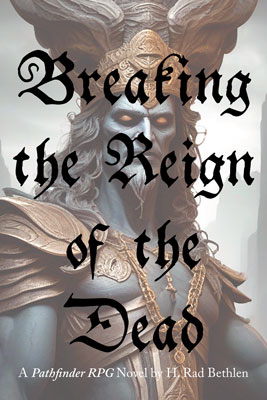
Breaking the Reign of the Dead
A Pathfinder RPG novel.
Kemnebi, the chancellor of the Blood Lords, has an epiphany while rewriting the legal code that governs the society of Geb. He realizes that the ultimate price of undeath is the denial of the soul's deepest need: to grow.
Kemnebi is pained by the irony of developing a legal framework to protect a culture whose inevitable fate is stagnation and decay. He tries to convince his fellow Blood Lords that Geb itself is fundamentally flawed and that the entire concept of a society of undead needs to be re-examined.
His initial idea is to reform from within; however, he faces immediate resistance. This resistance becomes so overwhelming he is forced to abandon all efforts at reform from within and must do so from without, making him an enemy of the nation he helped to build.
Will Geb allow his nation to be reformed, either from within or without? Does he care? Or does his obsession with revenge blind him to all other concerns? When he sees the opportunity to strike against his nemesis, Nex, his actions affect nations. No one--not Kemnebi, not the Blood Lords, not even Nex himself--can escape the repercussions of Geb's actions.
This epic tale of intrigue and strife spans three nations--Geb, Nex, and the Mana Waste--and has a cast of characters that includes Geb, Arazni, Kemnebi, the Blood Lords, the Council of Three and Nine, the Arclords, and many others.
H. Rad Bethlen, the award-winning fantasy author, rewards fans of the Pathfinder Roleplaying Game with every word of this exciting, fast-paced, action-packed story.
Available in Kindle, paperback, and hardback on Amazon.
Breaking the Reign of the Dead Kindle
Breaking the Reign of the Dead Paperback
Breaking the Reign of the Dead Hardback
To read the first chapter click here

In this collection of exciting stories the award-winning fantasy author H. Rad Bethlen brings to life the Inner Sea Region. As H. Rad says in the introduction, "If you tell stories in the Inner Sea, if your characters roam there, may they meet Captain Brindisi or Old Khalden. It makes me smile to think they will." In this collection you will meet these memorable characters and many more.
Will Captain Brindisi, the sole survivor of the wrecked ship Dragon's Star, live to see another day? If so, at what price? Will El-Barek, of godless Rahadoum, finally understand the true nature of love? Will he wish to? Old Khalden, a member in good standing of the Brotherhood of Silence, takes an opportunity to school a pair of apprentice thieves, yet he himself has one final lesson to learn. These stories and more await you in The Pathfinder Collection.
Buy The Pathfinder Collection - Kindle on Amazon
Buy The Pathfinder Collection - Paperback on Amazon
The first two stories in this collection is available for free below. The others are previewed here. Also previewed is the novella To Trick a God.
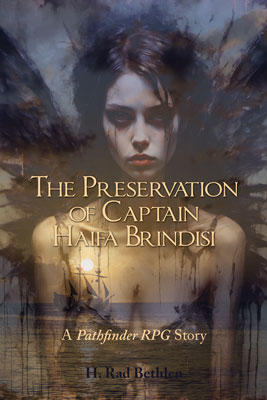
A dark secret lies within each heart awaiting the reveal. When we know what we truly are will we be appalled or will we accept our Fate? Shipwrecked and left for dead by the gods, Captain Haifa Brindisi must search within for the strength to survive. What she finds is a strength she never knew she had and the dark secret behind it.
Jump to The Preservation of Captain Haifa Brindisi
Available in:
Buy The Pathfinder Collection - Kindle on Amazon
Buy The Pathfinder Collection - Paperback on Amazon

A man of Rahadoum prays to no gods. He lives by his wits and by the strength of his sword arm. El-Barek is such a man. Now, adrift on a storm-wrecked ship, he must accept death. Given a moment to reflect on his life he can think of nothing but the woman he loved. She disappeared after a brief, passionate intimacy. She took his heart, his joy, his happiness. But she also took something else, something a man from Rahadoum cannot comprehend.
Available in:
Buy The Pathfinder Collection - Kindle on Amazon
Buy The Pathfinder Collection - Paperback on Amazon
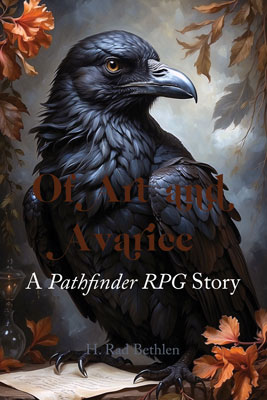
What can reduce a dwarf to tears. What can cause a crow to speak? What happens when beauty encounters the beast? In this charming tale set in Oppara, the capital of the once might Taldoran Empire, a trio of thieves learn the answers to these questions. They also learn the true meaning of avarice and are taught the rewards of the long con by a master thief.
Available in:
Buy The Pathfinder Collection - Kindle on Amazon
Buy The Pathfinder Collection - Paperback on Amazon
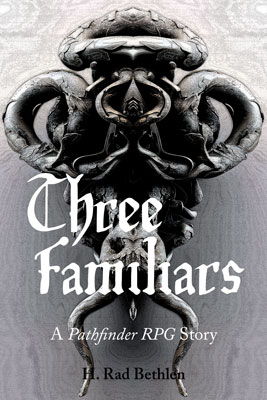
Desiring to give his familiar a healthy change of environs, and himself a vacation, Remus left his cold, wind-blown tower for that of a fellow apprentice he hadn't seen in years. Much had changed. A wizard's studies can often take him to the brink of sanity--or beyond. Appalled by what his friend had become, Remus fled home, his familiar tucked under his arm. Neither had returned to safety, nor had they fled alone.
Available in:
Buy The Pathfinder Collection - Kindle on Amazon
Buy The Pathfinder Collection - Paperback on Amazon
Worshipping an evil god--or a demon lord--comes with a price. Yet if one is obsequious--if one obeys--there are rewards. A pair of priests convene in a graveyard to form an unholy alliance. They don't realize they've interrupted another priest at worship, a priest whose god is even less charitable than theirs.
Available in:
Buy The Pathfinder Collection - Kindle on Amazon
Buy The Pathfinder Collection - Paperback on Amazon
Rastagar is a man of faith. His god is Razmir, the living god. Rastagar is also the cruel overseer of the penal mine at the Forgotten Track. There those who speak against or displease Razmir work the rest of their days breaking rock, the whip at their backs. But why? Yes, valuable ores and precious stones are found and collected yet there seems another reason, one unknown to Rastagar, although he begins to question. When a higher ranking Mask arrives from Thronestep, along with two curious companions, Rastagar's suspicion grows. Little does he know that a crisis of faith looms. Little does he know that the last days of the penal mine are at hand. Little does he suspect why this unusual trio have come.
Available in:
Buy The Pathfinder Collection - Kindle on Amazon
Buy The Pathfinder Collection - Paperback on Amazon
A Pressed Flower, Grain Exports, Aired Thoughts, and a Warning
The Cinerarium, Mechitar, Geb, Pharast, 4711
A cinerarium is a container in which to keep the ashes of a cremated body. It was Geb's morbid sense of humor that inspired him to name his palace so ignobly. It is an apt name, however. The immense pyramid--made not from sandstone blocks like those in Osirion, the country that birthed and exiled the immortal Geb, but from feldspar, a stone of granite, gneiss, basalt, and other crystalline rocks--was to be his eternal home, just as a true cinerarium holds one's mortal remains until time empties it.
Those massive blocks, quarried from the Shattered Range Mountains, were a plagioclase feldspar and thus were tinted red. The dawn sun made the massive pyramid--it dominated Mechitar's skyline, dwarfing the other pyramids, dwarfing even the Cathedral of Epiphenomena, Urgathoa's temple--pink. The noonday sun made it glow reddish-orange. The evening sun turned it the color of dried blood. The moon drained it of all color, turning it as pale as lifeless flesh.
Geb no longer occupied the pyramidal palace. He cared not for any of his palaces, libraries, summoning chambers, or macabre workshops; where, when he did care, he assembled rotting remains into semblances of life that more properly insulted it. Geb gave all such concerns over to his Harlot Queen, Arazni. She ruled the nation of Geb--he would, of course, name it after himself--in conjunction with Geb's hand-picked Chancellor and one-time confidant, Kemnebi, and the Blood Lords, a collection of sixty elites, many undead, but not all.
The Blood Lords met in what Geb nicknamed "the mortuary" but what was really the grand hall of the Cinerarium. Off one side of this grand hall was Arazni's personal chambers, the other, Kemnebi's offices. Kemnebi had a home of his own, a pyramid a fraction of the size of the Cinerarium--one does not upstage Geb--yet he visited it so infrequently he often forgot about it. No Blood Lords lived in or worked out of the Cinerarium, only Arazni and Kemnebi. It was a cold, silent, lifeless palace: a massive, empty tomb.
On this night the dead met. A meeting of the Blood Lords was just concluded. The business of the dead, old and new, considered. The reign of the dead continued unabated. These meetings were usually presided over by Kemnebi, with Arazni seated in a throne just behind him and a statue of Geb peering over her shoulder. Not this one, nor the two previous. Arazni was annoyed at the Chancellor's repeated absence, which forced her into bureaucratic duties she despised. The Blood Lords did not comment. They were not given to gossip. When the meeting was concluded they left--all but one.
. . .
Kemnebi had the keen senses of a predator. He was a predator. Geb bestowed upon him the blessing of vampirism. It was due to these vampiric senses that he heard the hinges of the iron door squeak, pause, then squeak again. He felt the air pressure in the room drop. He felt the warmth of life come into his space. Above all these sensations was the beating of a mortal heart, the rush-and-pause of blood in mortal veins, the iron-taste of blood on his tongue.
He knew a great deal from these clues. There were few beings, living or dead, but especially living, who had the courage or brazenness to enter his offices unannounced and uninvited. He knew, therefore, it must be one of the Blood Lords. There were only nine mortal Blood Lords. This narrowed the possibilities. As he ran through the list of potential visitors he heard the clack-clack of heels. A floral fragrance came to his nostrils. Still more clues.
He thought first of Narcisse, the former Duke Between the Rivers. He sometimes wore boots with heels, sometimes wore perfume, even cosmetics, but the lightness of the clack-clack ruled out the grossly obese cleric of Urgathoa. There was a tiefling, that is, a human with demonic blood somewhere in her lineage, also a worshipper of Urgathoa, who--while mortal--shared a supernatural tie with a phantom, but he could not recall the tiefling's name, even though she was a Blood Lord. She would never assume enough familiarity with him to enter his offices without his personal invitation.
He thought next of She-mah-hon, an ostirius kyton, emissary from the Abbey of Nerves, sent to Geb by Aroggus to welcome those few undead who can still feel and those remaining mortals in Geb to the glory of the Abbey's lightless halls and endless tortures. She was an unsettling presence, like all kytons, a race given to disturbing body modifications, and was crazy enough to desire an impromptu meeting, but Kemnebi ruled her out. She was mortal, or so he surmised, but her blood held an otherworldly and disagreeable odor. He would have tasted it in an instant.
There was Baya-Iza, a noble from Zirnakaynin, the greatest of the drows' subterranean cities, come to Geb to study in the Ebon Mausoleum and continue the ingrained habit of merciless social climbing, of which, she proved a great success. Or perhaps Kimberly Silent Eyes, a Vishkanyas assassin clever enough to realize that if she killed her employer and took their place few would object. Both were recent additions to the ruling elite of Geb, but neither seemed likely. They were minor powers in the hierarchy of Geb, like the nameless tiefling, and could be ruled out. As the clack-clack neared he decided from the few remaining candidates.
"Saskia."
"Chancellor." Saskia Kalff stepped into the circle of light created by the candles on the shelf above Kemnebi's desk. "I hope I'm not disturbing you."
Kemnebi set down the pressed flower he had been contemplating and turned his head to look at his unexpected visitor. A moment of silent observation passed between the two.
Saskia was no more a friend to Kemnebi than was She-mah-hon or any of the others. This was the first time she had been in his office alone, or really, with the Chancellor alone in any setting. She knew him, of course, being a Blood Lord, but he was as unapproachable as any truly powerful leader is. By all rights she was as entitled to his time and attention as any other Blood Lord, but to act upon that right was dangerous.
She found it odd that Kemnebi was contemplating a pressed flower. It brought so many questions to her mind she nearly forgot her purpose in coming. Of all the things she expected the undead Chancellor of Geb to be doing, pressing flowers was not amongst the likely activities. She looked down at him but made a conscious effort not to possess the demeanor of one looking down on another.
He had once been human, of the Mwangi people. Specifically he was of the Mauxi people, who denied kinship with the other tribes of the great Mwangi Expanse; a dense jungle cradled by mountains. The Mauxi people still speak the Osirioni tongue and unlike the brown-skinned Mwangi their skin often showed a tint of gray. Also unlike the kink-haired Mwangi, their hair was straight. The one trait they willingly shared with the Mwangi was patience.
Kemnebi was tall and athletic without appearing overly muscular. The nobility of his features fit him well as chancellor but would be equally noticed were he a common beggar. His nobility did not come from his station but from his being. His dark eyes were made still more enchanting by the gift of vampirism. He was handsome in a way that promised delightful ruination of any seduced by him.
That he was a practitioner of the arcane arts was well known. To be a one-time confidant of Geb was to share a love of necromancy with the immortal wizard-king. To rise and stay above the Blood Lords required a true mastery of the arcane, for the Blood Lords culled the weak from their own herd. Kemnebi had learned his necromancy from Geb himself, who, in turn had learned it from Hent-er-Neheh, one of his now mummified ancestors who taught him many a millennia prior, when both were still mortal.
That Kemnebi prickled with power was obvious to any who came near. To be chancellor of Geb required a keen knowledge of protective magics. What struck Saskia the most was not Kemnebi's power but his powers of observation. His gaze was attentive which made it unnerving, unnerving because he saw what was before him, not merely the reflection of his own desire. Kemnebi, seated, looked up at Saskia.
She was one of those rare practitioners of necromancy who did not lean upon that dark school of magic in order to surpass life, but to prolong it. Nor was necromancy her obsession, as it was for so many of her peers. She knew just as much about transmutation and alteration as she did about the school of death. In mortal years she was approaching seventy. In appearance, she was approaching thirty and had remained so for a long time.
She was a native of Qadira via Taldor. Her face was squarish with high cheekbones, framed by a mass of luxurious black hair. Her eyes were large and alluring, her eyelashes long and dark, lips full and red. A beauty mark lay just below the center of her right cheek. All that was seen of her creamy white flesh was her face, neck, and upper chest, as she wore a dark blue dress, a black corset, black satin gloves, and black leather boots. About her neck was a simple gold chain and an amulet with a blue stone. Tucked somewhere in her clothing was a song bird, now quietly nesting in its mistress's pocket. This was her familiar.
"Lilith?" inquired Kemnebi. Lilith was a fellow Blood Lord, a member of the clique that had long ago formed around Arazni, a lich, like Arazni, and Saskia's mentor.
"She is well," answered Saskia. "Our dear Marquis?" The Marquis Chevonde Garron was a vampire, Kemnebi's grandchild, in a sense. His sire was one of Kemnebi's "children," that is, a mortal he had embraced and turned into a vampire. Her name was Leah Ben-Reuven. Her memory was a painful one to Kemnebi as he had destroyed her in a rare fit of rage. Ever since then he had been especially kind to the Marquis and tolerant of his eccentricities. It was only by Kemnebi's leave that Chevonde was allowed to live beyond the borders of Geb. He had both a mansion in Katapesh and a pleasure barge in its harbor. He came to Geb only to attend the meetings of the Blood Lords. At all other times he kept livelier company.
It had been the Marquis Chevonde Garron who purchased Saskia from the slave markets of Katapesh. She was only seven at the time and Chevonde had elaborate plans for her. Thus began her tutelage in courtesan-ship and espionage. When Saskia was thirteen, polished in manner and speech, and knew what to look for in Arazni's court and how to secretly communicate that to the Marquis, she was sent to Arazni, the perfect child courtesan. Lilith put an end to it.
"A cute trick, Chevonde," she said during a meeting of the Blood Lords five decades prior.
"An amusement, nothing more," he replied.
"Would Arazni agree?"
"If she knew," responded the Marquis, "the child would be destroyed. Am I mistaken in believing you've taken a motherly role?"
"Don't expect any courtly gossip from our lovely Saskia."
"I would never. I only hope she remembers her eccentric uncle Chevonde favorably."
Much had transpired since then. Lilith had groomed Saskia for far greater things. At Lilith's insistence Saskia became a Blood Lord. Arazni was not hard to convince. She almost always took Lilith's advice.
"Has Lilith sent you?" asked Kemnebi. The smile on Saskia's face gave him pause. "I do not mean to imply--"
Saskia stepped more into the candlelight. She reached down, her eyes and smile on him, and picked up the pressed flower. She contemplated it. "Perhaps a delicate necromantic spell," she said, twirling the flower in her gloved fingers, "has taken the life from this yet kept it whole." She looked from the flower to Kemnebi. "Is that what occupies our Chancellor and causes him to miss three meetings in a row?"
If Kemnebi could blush he would have. He had forgotten about the meeting. He had not, so engrossed had he been, even heard the Blood Lords just outside his door. As if reading his thoughts, Saskia added, "You failed even to send a representative to make your will known," before setting down the flower, sitting on the edge of his desk, and folding her hands in her lap. The song bird chirped at the disturbance but tucked its face beneath a wing and resumed its slumber. "I make no accusations," said Saskia. She reached out and placed a hand on Kemnebi's. "I worry."
It was a bold gambit on her part. Kemnebi looked at her gloved hand, his expression unchanged. His eyes, though, spoke what his countenance did not. Saskia removed her hand to her lap but retained her casual seat. Despite her studied nonchalance, beads of sweat began to form on her brow.
Kemnebi's gaze moved to the flower. "In one of those," he said, looking now at the books. Saskia glanced at them and saw at once they had nothing to do with the arcane. "The legal codes of every nation of the Inner Sea," said Kemnebi, "that has a legal code." He looked up at Saskia. "Some do not. Some are not written down. Some legal codes are comprised only of parables and folk-wisdom kept in the heads of the village elders."
"Cheliax?" inquired Saskia.
"A labyrinth." Both chuckled at this and for a moment the tension between them lessened. Kemnebi reached out and picked up the pressed flower. "No doubt the wife of some scholar found a better use for her husband's books." He set the flower down.
"This?" Saskia picked up a single sheet of parchment marked with columns of numbers.
Kemnebi glanced at it. "Grain exports to Nex." His gaze shifted, as if he now looked to Geb's northerly neighbor. "The population of Nex grows."
"Good," announced Saskia. "We've an excess of labor and land." Both knew that legions of zombies worked the wheat, oat, and corn fields of Geb, the bounty of the land passing through decayed hands to Nex, Geb's former enemy. The soil of Nex could barely sustain life. Geb had seen to that in the millennia-long war between himself and his closest rival, Nex. Rare was it that two such wizard-kings should stomp about the land at the same time. That they did not keep a continent between them was due to ego. That they once shared a border and warred over it was due to folly. Saskia studied the null effect her words had on the Chancellor. "If economic matters make for poor--"
Kemnebi stood and began to pace in and out of the circle of light, alternately retreating and advancing. Saskia watched as he disappeared and reappeared. "Nex grows," he said. "Nex thrives. Nex evolves." He cast his glance at Saskia. "What of Geb? There is precious little life in Geb--"
"Precious?"
Kemnebi paused. "Yes, life is precious. You must certainly believe so. Given your--"
"I do."
Kemnebi resumed his pacing but did not speak. Saskia picked up the dropped thread.
"When any mortal within the boundaries of Geb dies," she began, speaking of a law Kemnebi certainly knew of, "they are raised as undead."
"Of course," mumbled Kemnebi.
"The poor go on to work the fields or have their skeletons added to the Bonewall. Those who can afford it, or who have secured favor, are brought back as higher forms of undead." When Saskia said higher forms a smile flashed across Kemnebi's face. He knew that those of wealth and station endeavored to secure a higher place in the hierarchy of Geb by becoming various types of undead, the more powerful the better. To be a mindless undead, or a type of undead devoid of freewill, was the greatest fear of all of Geb's mortal inhabitants.
Again a moment of silence passed. Kemnebi was occupied by his thoughts. Saskia bent and looked once more over the open books. "I forgot," she said, turning a few pages. "You're redefining Geb's legal code." She looked up at Kemnebi. He met her gaze but said nothing. "It must be difficult," she added, ceasing to finger the pages. "Is it this that occupies you so?"
"All nations founded and ruled by individual personalities share the same fate," said Kemnebi. "When those individuals no longer lead, they leave behind a vacuum."
"But Geb--"
"You must remember," interrupted Kemnebi, "that for almost all of Geb's history as a nation we were at war. Now we suffer peace." He smiled, but it was a forced smile. "A warring people know not how to manage peace."
"And so?" asked Saskia, glancing at the legal books.
"And so I must establish the rules that shall govern peace, so long as it lasts." He shook his head. His pacing took on a more violent motion, an external sign of internal emotion.
"Geb hasn't fallen apart--"
"Nor will it," announced Kemnebi, stopping at the edge of the candlelight, his face defined by the flickering flames. "It will stagnate. It will decay. It will die slowly, agonizingly. Finally, it will calcify. Meanwhile," he said, resuming his pacing, "the other nations of the Inner Sea will outgrow us, evolve beyond us." He stopped again at the edge of the candlelight. "And then--" But the look on Saskia's face alarmed him. She rose and looked past him to the door but Kemnebi knew it remained closed. She looked at him.
"No other Blood Lord would tolerate such heretical talk," she said. "Let alone Arazni or--Geb," she whispered the last, as if Geb would hear. She stepped to Kemnebi who stepped forward to meet her. Her movements were those of a panicked animal and she fell into him. He caught her, his hands around her waist, her hands on his chest. She looked up into his dark eyes and saw both the multitude of flickering candles and her own miniaturized self reflected within. "I pray you speak to no other as you've spoken to me." She parted from him, passed him, and hurried to the door. He watched her pull the heavy iron door open and slip out.
Breaking the Reign of the Dead Kindle
Breaking the Reign of the Dead Paperback
Breaking the Reign of the Dead Hardback
The Preservation of Captain Haifa Brindisi
A Pathfinder RPG Story
Being a record of tragedy, found in the wreckage of the sailing ship Dragon's Star; which, having been damaged while at sea and later smashed amongst rocks in the Ironbound Archipelago, was the scene of much suffering.
Let this stand as a testament to the weakness of the body, the capriciousness of the mind, and tell that the soul does suffer both. I am the only survivor of the ship Dragon's Star. I was born and raised in the fishing village of Arsmeril, on the northern coast of Varisia. My father was from Ustalav, having fled the curse of that soil. Nay, he did not suffer any soil, but passed from land to sea, to be seen no more. What I have of him is precious little; although, it can now be said, and you shall come to believe, that he did not leave me bereft of the gifts of his blood.
I was raised by my mother and uncles, simple fisherfolk; hearty, silent, and devout to the gods. I learned by heart The Eight Scrolls and can recite from memory the Hymns to the Wind and the Waves, being often of the necessity to call upon the guidance of Desna and the mercy of Gozreh.
I have many male cousins, but none were so by nature drawn to sea than I, and although I was a girl, my uncles did not keep me back, seeing that salt was in my blood. By the time I could balance enough to walk I had my sea legs. While the other girls of the village dreamt of the Eagle Knights of Andoran, or some suchlike romance, I was longing for open seas and fair winds.
If I had known what my fate would be, that I would not sail at the pleasure of fair winds, not at all, but be put meanly to land by the cruelest winds any sailor has suffered, I would that an Eagle Knight had taken me away and kept me in his castle, a pretty bauble, safe from all knowledge of sea and self.
Know that we suffered from a total want of all that would sustain life. The Dragon's Star had been battered by waves and was leaking profusely. We had endured relentless winds, which had the sinister nature of the fey. Indeed, we worried that some sea spirit was revenging us for an unknown injury.
First, two pair of our foremost main shrouds on the larboard side were taken by the wind. The next morning our two fore main shrouds on the starboard side were carried away. We applied runner and tackle for the security of the mast. The weather was intolerably bad, day and night. By the next morning the wind calmed. We sang hymns and made offerings to Gozreh. Despite this, the next day a sudden wind came and, to our unspeakable horror, tore clean away the forestay and foresheets. Not only this, the foresail was rent in pieces. We had no recourse and tried our best under a balanced reefed mainsail.
The sea was as mountains upon us and it was here that the ship began to leak in earnest, the wood strained beyond its natural constitution. That night the tack of our square sail gave way. The sail was torn to tatters. Our flying jib was blown overboard. Despite all this we made way, our only bit of canvas being our mainsail. Our ship sat low due to the water we'd taken on. We worked the pumps without respite. Gozreh was not finished. After a calm that put us at ease, a gale blew hard from SSE and took apart our mainsail. We were at his mercy.
. . .
The Dragon's Star sailed out of Magnimar. We'd a load destined for Promise, on the island of Hermea; yes, the home of the great gold dragon, Mengkare, or so it's said, none I know of having seen him. We'd made the port once before and little can be known of the city, for a high, red sandstone wall and gates of burnished bronze keep all within secured against intrusion from outside. We were blown NNW and figured ourselves closer to the Mordant Spire or Syranita's Aerie then Promise; although, we had no way of knowing, having no sight of stars, nor sun, nor land.
A great deal of our stores were flooded, despite our efforts to preserve them. Much of the cargo was of no use. We had only some small amount of flour, sugar, dried meat, raisins, wine, but precious little fresh water. We rationed these but my men, against orders, took the wine to excess and the rationing was forgotten. The storms raged and we knew not which way the wind took us. If we passed beyond the Mordant Spire all was lost, for no ships sail those waters.
We had among us a priest of Gozreh, Timmons, who we adorned with the title of Saint. He was an old sailor of many campaigns. He had seen the Eye of Abendego and many other wonders. He'd been shipwrecked twice before, the second time suffering forty-one days on a barren island. He was of great aid to us. Not only was he immune to the hardships of the sea, he could provide food and fresh water by means of divine largesse. We could scarcely believe our misfortune-and his-when a wave took him overboard and carried him out of reach. He disappeared, and with him our hope.
I cautioned the men against wine, for it does little to aid under such circumstances. They refused to drink the water, convinced it was brackish. The wine being more plentiful, they preferred it. What little water there was I retained, it being my only advantage against Fate. The men were constantly warming the wine, for which they maintained a small fire. It got so that the smell of it was noxious to me.
We'd been thirteen days at the mercy of the storm, tossed terribly, half-sunk, and without means, when I retired to my cabin to await the arrival of Trelmarixian, the Horseman of Famine, for he was surely stalking us. By this time I was emaciated with sickness. Despite having hooks in the water there came no fish. I kept within arms-length only this journal, an ink pot and quill, the dirty water, and Saint Timmon's wand. I must tell of this.
Timmons had fashioned a wand out of an oar that he had with him when he'd been forty-one days upon the rock. The oar, his trousers, and his shirt, were all that had come with him from the wreckage of the Ruby Prince. This oar was his means of survival and rescue. He used it to club turtles and crack their shells. He resorted to drinking their blood, there being no fresh water on the island, and gathering their meat by use of sharp-edged stones. He found the highest point and planted his oar, using his shirt as a flag. A ship, the Kantaria, which had been blown off course, saw the shirt-flag and sent a boat to investigate.
Timmons brought his oar from that desperate place and, feeling a certain affection for it, whittled it down to something manageable. This he enchanted with all sorts of useful magics. One of its enchantments was the calling down of a pillar of fire, which proved a deterrent to piracy. This wand was in his quarters when he was taken by the sea. I retrieved it, more to preserve the old man's memory, than to make use of, for I had no learning of magic and knew not how to operate it.
. . .
After a fortnight of hard blowing, the sea calmed. We were adrift. The men came and said they were hungry and having no recourse were going to draw lots to see which among them would sacrifice himself to preserve the rest. They wished my blessing on this demonic pact. Perceiving them in liquor, I begged them to wait out the day, hoping that our deliverance would come presently. They argued my request, saying what had to be done best be done now and why prolong our suffering.
They said they'd eaten all the leather belonging to the pumps, cut their shoes to strips and eaten those, and had even eaten the buttons from their coats. I warned them against the damage such an act would do to their everlasting souls. I beseeched them to pray. They said there was hunger to contend with, damn prayer. They said they cared not if I acquiesced, having come to me out of respect for my former responsibility as Captain, although they contended that circumstances had made all equal.
I told them I would never condone such an abhorrent act and while I could do little in opposition I would not give the order nor partake of their sinful feast. They responded that they required not an order and as to eating or not eating, I was free to follow my own inclination. They left but soon returned and said that they'd come together and drawn lots.
Know this, of those left all were human with one half-elf, who had been my steward, his name being Melorca. They said that the lot had fallen upon him. He flung himself at my feet, pleading that I do something, but I was powerless. The men drug him from my cabin. The manner in which they'd previously gone away to converse amongst themselves, and how the lot had fallen, gave me the idea that the half-elf had been sorely treated. Although, in all honesty, it surprised me that they'd even pretended to treat him as equal to themselves.
They dragged him to the steerage and pierced his neck at the base of the skull. This I was told of later. They cut him open and began to extract his entrails, wishing to fry them for dinner. One man, Dorset, was so taken with hunger he cut out Melorca's liver and ate it then and there, despite the fire being at-hand. He paid for his impatience. That night he went raving mad and was thrown overboard by the others, this, despite their wish to preserve the meat of his body. They were fearful of gaining his condition, should they partake of him.
That evening I heard one of the men say to the others, "Even though she would not consent our getting of meat, let us give her some." One of them entered my cabin with a piece of Melorca's flesh, and offered it to me. I raised the wand and said I'd rather burn him to Hell and the ship with him, then resort to such an act, and further dared him to return a second time with such an offering.
Despite their earlier excesses with both wine and stores, the men rationed Melorca's remains with the greatest of care. All this time I ate nothing, only sipping now and again of the water. Knowing that I had condemned them, and knowing too that their hunger should return, I expected some violence to my person. I slept little and kept Timmon's wand in-hand-as a bluff.
A few days after the last of Melorca had been consumed they returned to my cabin. They said they had seen nothing of land nor sail, had caught no fish, had no fresh water, and nothing else which would sustain life. They again asked for my blessing over the choosing of lots. Furthermore, they argued that all this time I had partaken of no sustenance and surely must be too weak to remain stubborn.
I argued against another act of murder. What good had the half-elf's death done them, for they were once more hungry and desperate? They said lots must be drawn. Seeing as I could do nothing to prevent it, and seeing how unfair their earlier selection had been, I tore a sheet from this journal into pieces and wrote everyone's name upon a fragment. These went into a can from which I drew a name.
The man whose name it was, El-Barek, a sailor who had come from far away Rahadoum, a man of great fortitude, beseeched his fellows: "I ask no god to help me, for they've done enough to damn us all. I ask only for five minutes to reflect upon my life." This was granted to him. Afterwards, he walked willingly into the steerage and met the same fate as Melorca.
I had suffered more than I ever thought I could endure. I had found a state well beyond weakness. I could barely keep my eyes open or grip my pen. It has taken every effort to keep up a journal.
I drank the last of the water, closed my eyes, and prepared to die. Some time later, I know not how long, I awoke with a greater thirst than I previously had. There was a rich taste upon my tongue. I found the strength to sit up. Besides me was one of my men, Hoskuld, an Ulfen. He held a wooden bowl in his hands, filled with blood.
"Quiet," he said. "Trelmarixian is close. Protest not, for it is too late. Drink." With this he held the bowl to my lips. I drank. I drank not only that single bowl of El-Barek's blood but many. I slept well for the first time in memory and was so completely restored that I was able to leave my bed and walk amongst my men. Indeed, I was so fully restored that I felt not at all the ill effects of starvation, nor of dehydration. The men gazed at me as if I were a miracle. Even though they had consumed Melorca and were now consuming El-Barek, they had little health, keeping just out of reach of the Horseman.
The sky was clear, the sun especially bright. I found that it pained me to remain under it. I found also the smell of El-Barek's cooking flesh to be revolting. The aroma coming from the pail of his blood, however, was so agreeable that before I was aware of myself I was drawing it out with cupped hands and drinking as a glutton.
This made the men wary. They offered me meat but I declined. I was aware of their judgment and returned to my cabin. I licked and sucked every crevice of my hand's flesh. The taste of blood was intoxicating. I sat on my bunk in a state of unwholesome wellness. It was a pleasure to be out of the sunlight.
Despite all I had drunk, I could not refrain from obsessing over El-Barek's blood. I began to jealously desire it for myself. That evening, as soon as the sun fell below the horizon, I went to the deck and found the pail empty. This aggrieved me more than reason would suggest. I was furious and kicked the men awake to inquire if they'd thrown the blood overboard. No, they said, they drank it. I began to accuse them but caught myself and returned to my cabin.
I was too agitated for sleep. I felt that I'd been wronged by my men. I believed that El-Barek's blood was mine. I was in a near frenzy when I came to myself. Where had such thoughts come from? Was I truly so desiring of human blood that I planned vengeance upon those who had denied me?
It was then that I understood why I had been so completely restored by El-Barek's blood. I understood why my father, who I always thought dishonorable, had not stayed to raise me, but had taken a boat and gone alone upon the water never to return. I understood that it was not the cursed soil of Ustalav that my father fled from, but the curse within himself. My father, although he had once been, was not human, nor was I entirely human, and had never been. They've a term for my kind, a term told in stories to frighten children, a dhampier. The living offspring of a vampire. A live-born undead.
I barricaded myself in my cabin, fearful that the craving for blood was too powerful a lure. I feared not my men, I feared for them. In time my men came to the door, beat upon it, and announced "land ho." I freed myself and went to the deck. Indeed, there was land. We rejoiced. Here might be civilization and with it hope. If not people and their works, may there at least be fresh water and wild nature with all her bounty. We were at the mercy of the wind and waves. We had not even oars, we used prayer instead. As if by miracle, the waves carried us to the island.
Yet, the miracle failed. As we approached we saw that the island was barren rock. Worse than this, we were being carried toward it with haste. There was no shore upon which to make a safe landing, only sharp rocks. We braced for impact.
. . .
The ship was smashed upon the rocks. We made our way onto the island. It was but little larger than the Dragon's Star and completely devoid of life. Nor was there a spring. There were some divots and natural bowls which we cleaned out in the hope that rainfall would fill them with fresh water enough to drink. Each man watched his divot as if water would appear by necessity alone. Would we once again resort to lots? Not I, for I was twice as strong as all my men combined and could overpower them.
No, there would be no lots. There would be no killing of one to preserve the rest. My men were for me. They held my nourishment within. All the blood on that island was mine and would be used to keep me alive until the time when Desna, the goddess of luck and travelers, should vouchsafe my deliverance. If she did not, then the blood of my men would serve only to prolong my misery, nothing more. As to their misery, was I not relieving it?
. . .
The last man was two weeks dead when I accepted the will of the gods. I sucked his blood until it was no more. His body was so drained, so light, being only bones and flesh, it caught the wind and sailed when I kicked it from the rock. I was reduced to my previous state, one of utter weakness. Once more did the Horseman of Famine, that prince of starvation, stalk me. I had done all for naught; sacrificed my soul, my salvation, and secured eternal damnation, for what? A few extra weeks of life upon a barren rock.
. . .
I was in the ship when I heard a voice. The remains of the Dragon's Star had been tossed high enough on the rocks to remain out of the water, and thus had drained. It was the only place of shade and, while certainly not comfortable, it was the only respite afforded me. I was near death and thought myself delirious, when one man inquired of another, "Signs of life?" I turned my head to gaze out of a hole. I saw a man pass by. He was studying the wreckage but had not seen me, sunk in the gloom.
I thought him a delusion and dismissed all thoughts of rescue; which, I had long abandoned in favor of death. Yet the voices continued. I crawled free of the wreckage and saw that a boat rowed close. Five men sat within, fresh, young, well-fed, and shocked to see me. They had come from a ship at anchor, to which they pointed. I saw the King's colors, King Eodred of Korvosa. I was saved.
. . .
I pen these last words with haste. I must leave my record here, in the Dragon's Star. I dare not take it with me, for fear of being found out. Can I digest human food, or must I now, and forever, subsist on human blood? I shall learn while aboard the Belde, for that is the name of the ship.
I will say nothing to my rescuers of what has transpired, or of how I managed to outlive my men. It is enough to know that I leave the truth to rot upon this barren rock as the gods left me. I shall pray no more, but, like El-Barek, whose blood awakened me, I shall exercise my own reason, rely upon my own strength, a strength which has saved me while the gods remained aloof and uncaring. I shall go to Ustalav, to learn what I truly am, or perhaps to distant Geb, where I need not fear.
Haifa Brindisi,
Captain of the Dragon's Star
Available in:
Buy The Pathfinder Collection - Kindle on Amazon
Buy The Pathfinder Collection - Paperback on Amazon
The Love of El-Barek
A Pathfinder RPG Story
"Let us speak," said El-Barek. "Or, allow me to speak. Will you listen?"
"Aye," said Hoskuld, an Ulfen, who had, as a young man, rowed free of the ice-choked fjords of the Linnorm Kings to live upon the water ever since. This was the first voyage the two had made together--and would be the last either would make--yet, amongst the crew, it was the Ulfen that El-Barek was most fond of. He had found, despite the superstitious nature of the Ulfen people, being especially pronounced in his shipmate, that they shared something in common. It was an oft spoke refrain that: "A Rahadoumi laughs at death--but it is a shared laugh, not a defiant one." He knew the Ulfen felt the same; albeit, more defiant than shared.
The two shipwrecked sailers went below deck. Hoskuld sat upon a barrel that had become wedged amongst what remained of the smashed and ruined cargo. El-Barek stood, feet apart, arms crossed over his chest. Neither felt the bite of the wind, that, having gathered the chill from the plains of Icemark, blew through the gaps in the boards.
Both were emaciated, their features made sharp. The reddish-blonde had drained from Hoskuld's chin whiskers, just as the warm-ochre had drained from El-Barek's flesh. Slow death had turned them gray. They wore far less than they would have liked. Their coats were without buttons and hung open. They were barefoot, having long ago cut their shoes into strips, boiled these in wine, and eaten them. Even the wine was a memory. The boat rose and dropped on the waves. It had lost its sails weeks prior and was more wreckage than ship.
El-Barek had requested a moment to contemplate the meaning of his life, for he was preparing to die. They had drawn lots, the doomed sailors of the Dragon's Star. He was to die so that the others might consume him and live. They had done the same to one prior; a half-elf named Melorca, who, in El-Barek's eyes, had not shown courage when called upon to make the ultimate sacrifice.
El-Barek found it inadequate to reflect alone and in silence. He did not desire a priest, being of Rahadoum, and therefore godless, and besides, the priest had been washed overboard. All he wished was for one who might understand to listen.
"I have no sins to confess," he began. "Nor have I regrets." Hoskuld did not speak, but looked on, his blue eyes sunk deep. El-Barek continued. "I have been in love. It is of that I wish to speak," he paused, not knowing how to begin. He began obtusely. "In my homeland, before the gods were banished, there was a Caliph by the name of Abdelraham. He was great because he brought peace to the land and prosperity to the people. He was a loving father to all. He was cultured and wrote sublime verse. He caused much fine architecture to be erected, many temples; which, after his time, were pulled down.
"I've read his memoirs. In them he says, that although he reigned three decades in peace and prosperity, and had the respect and love of his people, and the respect of the genie-folk; who came to his court from lands of brass, of coral, and from cities built of cloud-stuff; although he had all this, including every want of riches and pleasure, and a harem of which the gods were jealous, he had diligently counted the days of genuine happiness that had come to him, and found them to be fourteen."
Hoskuld snorted. El-Barek couldn't help but smile.
"I myself have had twice as many," El-Barek said. "It seems, now that death is at hand, and I've an entire life to reflect upon, I can think of nothing but those brief, bewildering days of passion."
"Tell of her."
"She was fey-blooded," said El-Barek. "Had she come from that great and mysterious oasis, the Eternal Oasis? Or had she come down from the Napsune Mountains, a heavenly bird, forced to land? Or had she come from some distant and unknown world, authored before ours, and having been so, is changeable, as was she? She would not say. Although I was madly in love with her, I knew nothing about her."
"Makes it worse," said Hoskuld.
"The words you speak are more true than you know," said El-Barek. "She had hair the color of the fire's dancing flames and eyes like turquoise stones seen through pure water. Her skin was as golden sand under a white-hot sun. To touch it was pleasure and pain."
"Aye."
"Pain," continued El-Barek, "because one could never touch her enough, or deeply enough, and always there is an end to touching, for one can not subsist on love alone. In her absence there is longing for her, and the desire to touch her again, and no amount of camaraderie, laughter, or good work can fill the void she's left."
Both men reflected upon this.
"A fey-blooded woman is a difficult thing for a man of Rahadoum to contemplate," said El-Barek. "For the men of Rahadoum, the women, too, are of a pragmatic bent, live by a pragmatic philosophy. We must, we've no aid from gods. The fey-blooded are beyond philosophy. Contemplation can make nothing of them. They are alive. So very alive! What can a man's mind make of such abundance of life in the woman he loves? To dwell on it makes him drunk. Argh!"
Hoskuld smiled, despite his hunger and the weariness in his body.
"She loved to listen," continued El-Barek, "and would stare at me with the wide-eyed wonder of a child as I spilled out every precious memory to her. Her questions were poignant. She drove to the heart of the matter always, to the emotion, to the very essence of experience itself. I felt more alive recounting my days to her than I did in the living of them."
"Ha!"
"I poured myself into her. She proved a bottomless vessel. She loved to feel the warmth of the sand just after the sun sets and the air grows cool. Also, the coolness of the sand just as the sun rises and the air grows warm. These dusk and dawn sands were ours. We made love on them, lying on the pelts of predators.
"I spoke of my childhood, of my father and his many voyages, of my mother and sisters. I spoke of my youth, of my fights and flights of fancy, of the girls I pined for and the wizened scholars who filled my head with man's accumulated truths. I had tried my luck as an adventurer, seen all manner of beasts and dangers. When a Chelaxian summoned a devil from Hell, he put a stop to my lust for fame and fortune, but not adventure. I took to the sea, as my father before me. It was during a rare stay on land that I met her.
"We spent twenty-eight days of pure happiness together at the edge of the Eternal Oasis, where no man or care disturbed us." El-Barek fell silent.
"What happened?" asked Hoskuld.
"I reached for her one night, the stars above like cold, distant hearts, the logs of the fire aglow but no longer aflame--"
"Gone?"
El-Barek gazed for a long time into his past. "Yes. I searched for her, in that jungle-like wood about the oasis. I searched the dunes. I searched the heavens. There was no sign of her. If it were not for her fragrance on the furs, for the lingering touch of her at my fingertips, if it were not for her breath on mine, I would believe she had never been."
Hoskuld waited, seeing that El-Barek was not yet done.
"Something more was gone," said El-Barek.
"Yes?"
"A piece of me, of course, my heart, my love, my happiness, these things she'd taken, as the poets say," he flashed his eyes at Hoskuld, "yet, something--more."
Hoskuld studied the other man's face.
"When I came out of the wood and ran into the desert I saw what was missing, no, I did not see what had always been." He looked hard at Hoskuld. "My shadow--gone."
"You mean--what do you mean?"
"I cast no shadow, still, to this day," said El-Barek.
"But--"
"You've never noticed. None have. A ship is a poor place for shadow-watching. The sails cast deeper shadows. The ship is always being tossed about. Besides, a sailor's eyes are never on his feet but up in the shrouds or out over the horizon. His feet must take care of themselves."
Hoskuld looked down at El-Barek's feet but the two men were below deck and what little light they had was insufficient for shadow-casting. He rose, grabbed his friend by the arm, and pulled him up onto the deck. He gazed for a long time at the sunlit spot beneath El-Barek.
"One hardly thinks of shadows," said Hoskuld, his voice little above a whisper. "One never looks," he lifted his eyes and met El-Barek's. "She took your shadow?"
"I don't know," said El-Barek. "I can't comprehend it. When I went below, to think about my life, to pour over my memories in search of meaning, I could remember only her. She left a few scraps behind, yes, unimportant details, of my life prior to her," he held out his hands, "almost nothing remains."
"Not fey-blooded," growled Hoskuld, "a true fey."
"Yes."
"By Torag," said Hoskuld, "what's to protect a man's mind against such magic?"
"My mind?" El-Barek laughed. "I've little concern for my mind. My heart--" He saw the other men approaching. They had hunger and impatience in their eyes.
"It's time." Called one.
"I'm ready," said El-Barek. He turned to Hoskuld. "If I may impose further, friend?"
"Anything."
"The Captain, she condemns us. She prays when she should eat. She waits for deliverance when she should take action." He glanced toward the closed door to her quarters, then back to Hoskuld. "When I'm dead, take my blood to her and make her drink. Tell her it's water, if you must. She will die without." He glanced above, to the heavens. "The gods have forsaken her." He looked at Hoskuld and the others. "All of you. As for me, I don't want their help and wouldn't take it." He turned back to Hoskuld. "Will you do as I ask?" Hoskuld nodded. "Then there is no more need for words."
Available in:
Buy The Pathfinder Collection - Kindle on Amazon
Buy The Pathfinder Collection - Paperback on Amazon
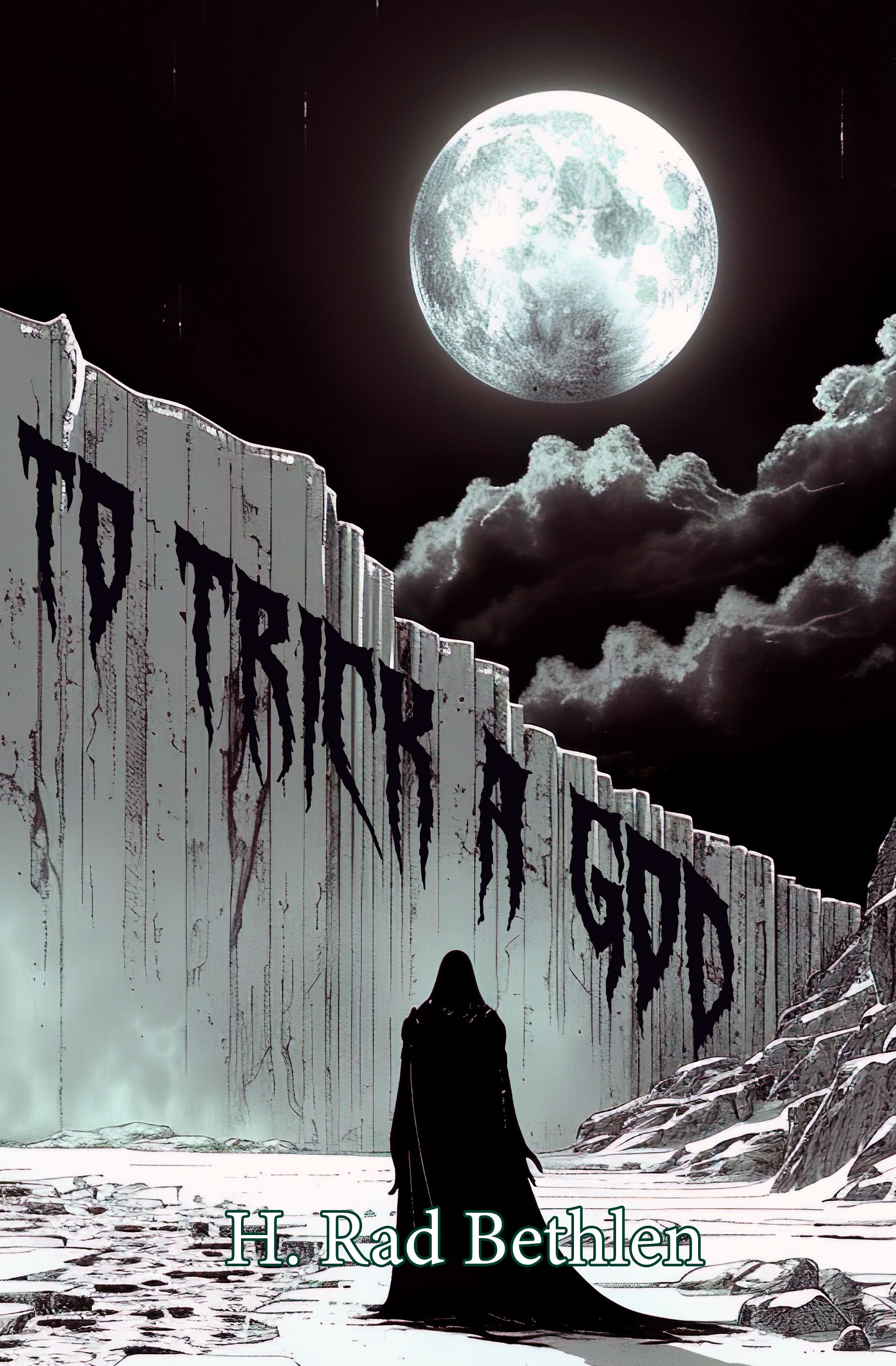
To Trick a God
A Pathfinder RPG Novella
I have not heard your pleas in a long time, Maret.
"I need you."
Need?
"Devinti is dead. The young are clever, cruel, and desperate."
The children of the revolution turn on their parents?
"Yes."
You fear them?
"Yes."
Destroy them.
"They are endless."
Doubt? From you?
"One must consider failure."
Meaning?
"What will become of me after death? I have sinned."
How does one escape the repercussions of one's actions?
"I'm asking you."
. . .
He stood behind Maret. He never faced her. Not even preternatural speed, lent to her by magic, could move her fast enough to catch sight of him. He had always been and would always remain a mystery.
"Can he do it?" she asked.
I can think of no other.
"Will he?"
From behind--silence.
"The price?"
From behind--laughter.
"Take me to him."
. . .
The valley was a cornucopia of verdant life. There was barely room enough to pass--the flora pressed. The air was dense with fragrance. Countless birds fluttered from branch to branch, disappearing into pockets of sun-edged shadow. A copper-colored fox passed by Maret and her companion, brushing against them. He stopped to sniff Maret's bare ankle before ducking under a cluster of drooping dock leaves.
"Here?" asked Maret, incredulous.
A cave.
Maret folded back the leaves and branches. She slipped her bare toes beneath delicate flowers, her sandals tucked under her left arm. She was afraid to snap a twig, crush a blossom. She was afraid even of scuffing moss from a stone. Who knew what might anger him? With agonizing care she crossed the valley floor. As she approached the base of the cliff she saw the shadowed hollow. It was tall and narrow, like a black-bladed dagger thrust up from the earth, lodging itself in the stone. She paused.
Butterflies danced before her, flitting through the air. She watched them--annoyed. When they passed she intoned a spell. It was a simple cantrip, one that alerted her to the presence of magic auras. Her senses exploded. It was all magic. She clenched her eyes shut and ended the spell. After a minute of dazed and wobbling uncertainty her senses regained their courage and function. She heard chuckling behind her and ignored it.
She slipped sideways into the narrow cave. It curled into the stone. She was forced to shimmy herself along, smashing her breasts, scrapping her knees, wedging herself deeper and deeper until she could go no further. 'At least he's not behind me,' she mused. She glanced to her side. If the demon with whom she had long ago struck a bargain had followed, she would finally lay eyes on him. There was only darkness. She began a minor spell. The humid darkness of the cave was dispelled as the flickering light came into existence.
Maret would have leapt in surprise, were she not held immobile by the stone. She was face-to-face with another. As she calmed and took in more visual information she discerned that what she had taken to be another fully realized presence was nothing but a face carved in the stone, a partial face at that. A small section of the cave wall had been pressed back into a concave shape. Rising out of this bowl was the broad forehead, heavy eyebrows, high-arched nose, and square cheeks of an aristocratic face. It was as if a clay-worker had come into the cave, pressed her thumbs into the stone, and left her work uncompleted.
The eyes opened and stared with stony indifference.
"I--" Began Maret.
Emotion overcame the face: profound sadness. The "skin" around the eyes crinkled. The muscles that directed the cheeks pulled them taunt. If stone could weep it would have. The emotion reversed, returning to normal. A moment later came irritation. The brow furrowed, the eyes narrowed. The anger was subdued but present. The effects of the emotions were so complete they nearly silenced Maret. She was, however, a woman not easily silenced.
"--need a shabti."
The face lifted, grinding, moving against itself, until a pair of broad, sculptural lips came into view.
"A vessel?" asked the face of stone. The trio of syllables came ponderously, echoing in the small space.
"Yes."
"To contain?" Again the trio reverberated.
"Sin," said Maret.
"Sin?" asked the face of stone.
"Can you make such a thing?"
The mouth curled downwards. The face sank, the lower half disappearing beneath the thumb-pressed stone. The eyes closed.
"I fear death." Admitted Maret.
He made no response.
"I fear," she searched, "judgment."
The face emerged fully. The eyes opened.
"I've lived more than two centuries." Began Maret. She appeared in her mid-twenties--part of the bargain. "I've made a pact with a demon. I've slaughtered hundreds, thwarted the fates of thousands, subjected entire peoples to tyranny." The face remained blank from emotion. "What awaits me?" Maret studied the face in the stone, the face of stone. It fluctuated between the lifeless chill of sculpture and the animated warmth of life. The features did not move. It was merely energy, consciousness, that seemed to come and go. Even when this consciousness came, was present, there came no response to Maret's plea. She made another.
"Will I be judged?"
Something affected the eyes. Again, not material, but energy. The word "judged" brought forth a heightened consciousness. Despite this, the stone did not speak.
"I want a shabti to take my place," said Maret, "to be judged, to be punished."
"You want to trick a god?" asked the face of stone.
"Can it be done?" asked Maret.
The face grew contemplative. Silenced reigned for some time. "She judges every soul that passes beneath her never-blinking gaze," said the face of stone. "Each soul is naked before her."
"It can't be done," said Maret, defeated. The full weight of her sin bore down upon her.
"A man beholds a river," said the face in the stone, his deep voice resonating in the small space. "He cups his hand, he drinks. The river is in this man, wherever he goes." The face did not elaborate.
Maret, baffled by the metaphor, asked, "Meaning?"
"What is a soul?" asked the stone face.
"I don't--"
"If a soul be a river, can the soul be drawn from? If drawn from, what becomes of that which is taken away?"
Maret could not answer.
"There is but one soul, one river--divided--to which all drops return. First," the face fell silent, studying Maret with hard eyes, "these drops must be--purified--before they return home. This is what you fear."
"Yes." Admitted Maret.
"It follows," continued the face of stone, "that to be purified in advance is what you wish."
"The shabti?"
"To gather the water which you have fouled, to separate it from the clean. To subject it to--purification." The stone eyes regarded Maret. "This can be done."
"Yes!" Maret was giddy. The silence of the stone face dampened her premature celebration. She studied it. "The price?" She could only whisper the question.
"All water returns to the river," said the sculpted face. "Yet not all water takes the same path home."
Maret grew nervous.
"I can draw the brackish from the fresh. For this, I will have a handful to raise to my lips."
Available in:
Buy To Trick a God - Kindle on Amazon
Buy To Trick a God - Paperback on Amazon